
Carlo Scarpa: a poet turned architect
A journey through the eyes of the architect who sculpted light, drew silence and built emotions. Six films that explore spaces where time settles in the details and where water, stone and glass become a language. A tribute to the restless, carefully conceived beauty of Scarpa’s work. From the Castelvecchio Museum to the Brion complex, from the Querini Stampalia to the Olivetti shop, this exhibition explores the work and thinking of one of the masters of twentieth-century Italian architecture, his dialogue with materials and time, and the poetic tension that pervades every aspect of his design practice.
CURATORIAL TEXT
Carlo Scarpa was an architect, professor, intellectual and craftsman of form and thought. Venetian in outlook as well as in biography, he was able to fuse East and West, past and present, detail and vision. Like his city, his work is imbued with reflections, transparencies and dualities: an architecture that does not impose itself but whispers, seeking in time and materials the possibility of revealing hidden meanings.
The programme features six films that explore Scarpa’s work through symbolic locations associated with his architectural practice.
From the Brion Tomb to the Querini Stampalia Foundation, from the Castelvecchio Museum to the Olivetti Shop, the figure emerges of a designer who was able to engage with history and with materials, imbuing spaces with a multi-layered soul, forged through an intense relationship with visionary clients – such as Adriano Olivetti and the Brion family – and thanks to skilful collaboration with craftsmen and workers, the true co-creators of his architecture. Scarpa did not design for the finished work, but for the very process of construction itself, where every gesture, every joint, every variation became part of a broader composition.
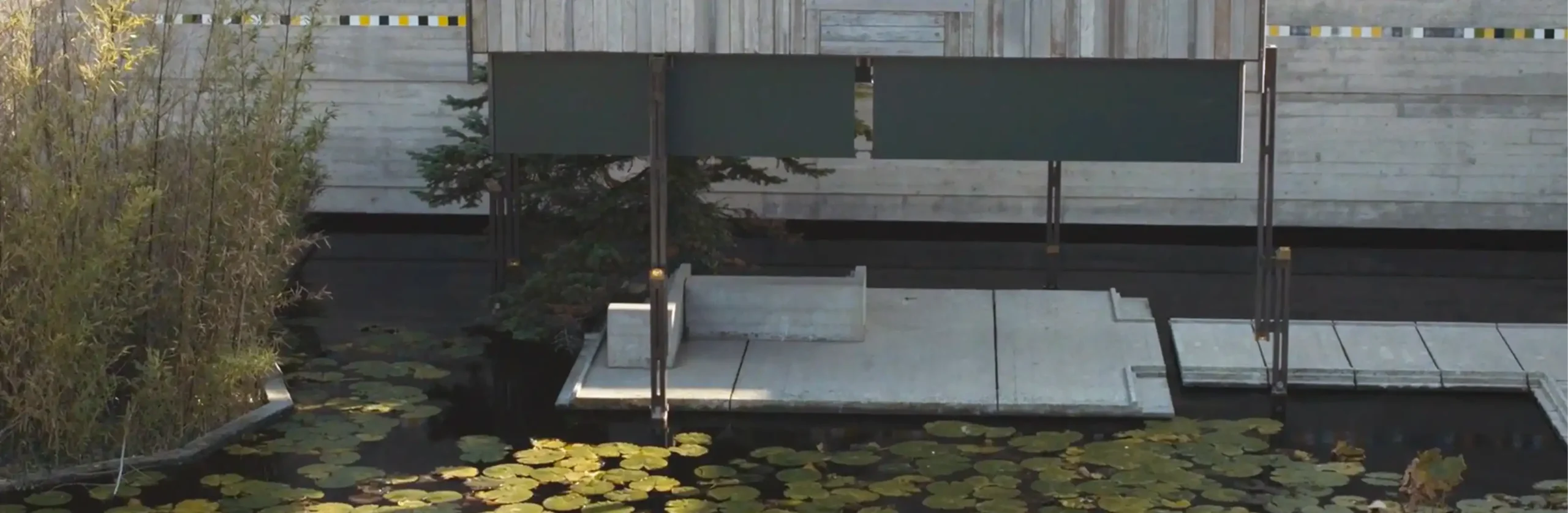
In the documentary “Il Padiglione sull’Acqua”, Stefano Croci and Silvia Siberini take us into the heart of Scarpa’s Eastern soul, amidst water reflections and Japanese influences. With “Memoriae Causa” and “Genius Loci”, Riccardo De Cal guides us, respectively, inside the Brion Tomb and the Olivetti Shop: two symbolic places, two small cosmoses in which detail is already structure. “Nulla Dies Sine Linea”, also by De Cal, is a journey through the restoration and reinterpretation of the Castelvecchio Museum, where the dialogue between the ancient and the modern becomes a critical and poetic gesture. With “Hortus Conclusus” and “Un luogo amico”, we return to Venice, to the Querini Stampalia: an intervention that is threshold, city, water, courtyard and memory.