
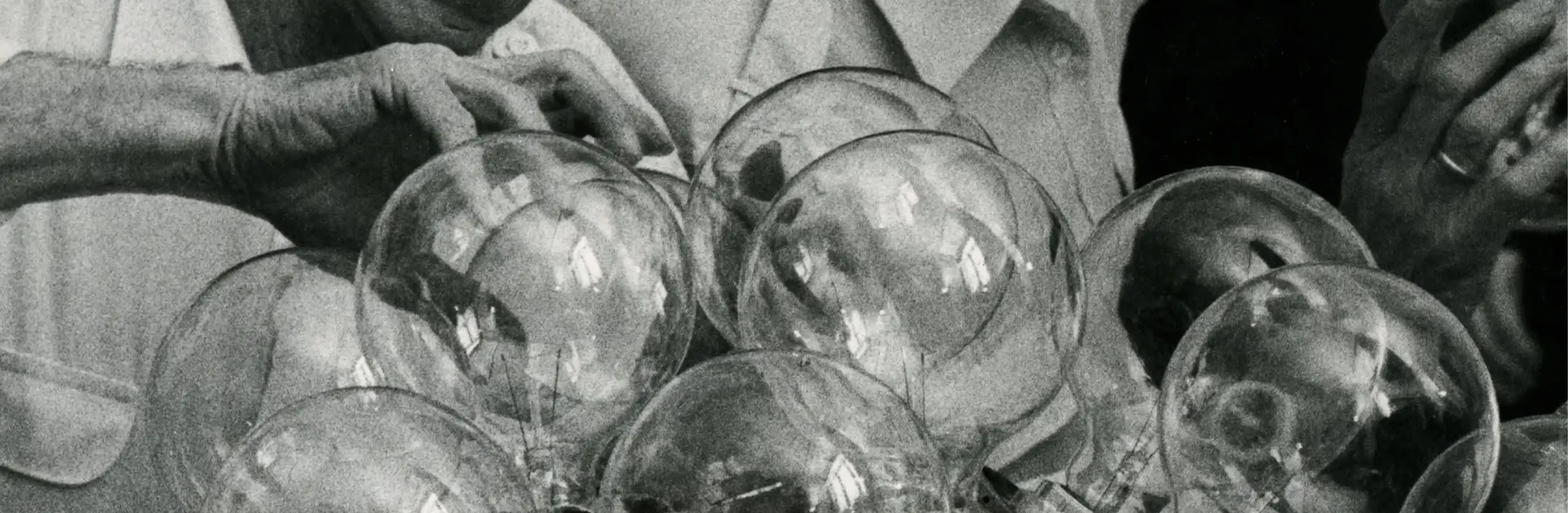
Milan, Design Capital. A Generation of Masters
- Achille Castiglioni. Tutto con un niente
- Loving Gio Ponti
- Cini Boeri. Autonomy and Function
- Alfabeto Mangiarotti
- Sinceramente, Gae
- Gae Aulenti and her archive-home
- An Angel above Milan: Mangiarotti and the city
- Vico: il grande semplice
- Franco Albini. Uno sguardo leggero
Milan, Design Capital is a journey through the places, faces, and ideas that made the city a global benchmark for design culture. From great masters, including Gio Ponti, Gae Aulenti, Castiglioni, and Albini, to “rebels” like Sottsass and Mendini, or more intimate, contemporary voices, such as De Lucchi, the showcase intertwines stories of life and creative visions. Through archive-homes, iconic objects, trains, lights, and dreams, these films lead us into the heart of Milan, where design arose from a dialogue between time, space, and imagination. It’s a city that not only tells its story but reinvents itself every day through those who envisage and inhabit it.
CURATORIAL TEXT
Milan’s teaching begins with a glimpse of its streets, dotted with architecture and objects that speak about a whole generation of Milanese designers, either born or emigrated there, who’ve embodied its most progressive and dynamic spirit. Not just tireless professionals but also generous teachers— the interpreters of a polytechnic education of great depth and high cultural stature. These figures have contributed to turning the city into an enduring workshop of ideas, in which design and architecture interact with art, technology, and everyday life.
Visionary and eclectic, Gio Ponti was the great ambassador for Italian style throughout the world, capable of combining elegance and functionality. Founder and director of Domus magazine, he succeeded in building an ideal that influenced entire generations of designers. His buildings, such as the Pirelli Skyscraper, and his design objects — from Richard Ginori chinaware to furniture for Cassina — bear witness to his unique ability to bring together precision, lightness, tradition, and modernity. Ponti didn’t only construct, but he also taught people to see the world as a space that could be continuously reinvented.
A master of irony and subtraction, Achille Castiglioni taught that design arises from a careful observation of simple things. Together with his brothers Livio and Pier Giacomo, he created icons such as the Arco lamp and the Mezzadro stool, thus transforming common objects into extraordinary inventions. His approach was one of lightness and intelligence: “If you’re not curious, don’t bother”, he would say to his students at the Polytechnic University. Castiglioni conveyed the idea that design should never be self-referential, but should provide functionality and pleasure in use, without ever relinquishing poetry.
A meticulous and cultured figure, Franco Albini embodied the more ethical and austere dimension of Italian Rationalism. An architect, as well as a product and exhibition designer, he always worked with obsessive attention to detail and materials, with a view to combining structural lightness and formal clarity. His museum setups and furniture, such as the Margherita armchair, are models of balance and sophistication, even today. At the Polytechnic University of Milan, Albini trained generations of students, instilling in them the idea that architecture is a civil service and cultural responsibility.
An engineer and architect, Angelo Mangiarotti was a master of sobriety and precision. His work was anchored in continuous research into the relationship between function and beauty, with a special focus on the innovative use of materials. Renowned for his ability to bridge industry and craftsmanship, he created furniture and architecture whose technical perfection merges with an almost sculptural sensitivity. To Mangiarotti, Milan was an open workshop, where he could experiment with uncompromisingly simple forms that would become timeless.
The only woman among the great masters of her generation, Gae Aulenti managed to establish herself in a landscape dominated by men, with an original and influential language. A cosmopolitan architect, she designed projects that transformed symbolic places, such as the Gare d’Orsay in Paris and Palazzo Grassi in Venice. Her lamps, including the Pipistrello, show her peculiar sensitivity to the relationship between light, space, and atmosphere. Her archive-home in Milan tells the story, even today, of an intellectual who made designing a civil and poetic gesture.
An architect and designer who left a strong social impact, Cini Boeri always placed the individual and living quality at the heart of her work. A pupil and collaborator to Gio Ponti, she harbored an idea of architecture as a space for autonomy and freedom, designing homes, interiors, and furniture to improve everyday life. Her modular lounge chairs and sofas, such as the Bobo and Serpentone, reflect her specific focus on the casual and customizable use of spaces. With courage and consistency, Boeri paved the way to new democratic and inclusive lifestyles.
A master of anti-rhetoric, Magistretti elevated the ordinary to extraordinary through sober, cultured design, in which simplicity became a tool for sophistication. His work is a “theory of praxis”, in which aesthetics arise from function and lightness becomes a value.
These masters, each in their own voice and language, helped turn Milan into a design capital, not just with the quantity and quality of the works they created, but also with the cultural impact they left. Their architecture, objects, and teaching produced a legacy that continues to nourish the city and its new generations of designers. Their works weave together technical innovation, formal precision, and poetic sensitivity, painting a picture of Milan as not merely a showcase of excellence but a living place of dialogue, experimentation, and memory. The showcase invites us to explore this heritage, not as a static archive, but as an organism in continuous transformation: the testimony of a city that, through design, continues to ask questions, reinvent, and launch itself into the future.